Clint Yorty, 49, Killed in Bethel Township Interstate 78 Crash: Disabled Vehicle Facing Wrong Direction Struck Head-On in Eastbound Lanes – Berks County Coroner Confirms Death; Second Driver Extricated with Non-Life-Threatening Injuries; Autopsy Scheduled – April 23, 2026.
Tragedy in the Eastbound Lanes: Clint Yorty, 49, Dies After Disabled Vehicle Facing Wrong Way Is Struck Head-On on I-78 in Bethel Township; Second Driver Trapped, Extricated by Emergency Crews
BETHEL TOWNSHIP, Pa. (Schuylkill County) – A Wednesday night commute on Interstate 78 turned into a nightmare of catastrophic violence when a disabled vehicle – stopped in the left lane and facing the wrong direction – was struck head-on by an eastbound car, killing the driver of the disabled vehicle and leaving both motorists trapped in the wreckage. The victim has been identified as Clint Yorty, 49, of Schuylkill County, according to the Berks County Coroner’s Office. Yorty was transported to Reading Hospital where he was pronounced deceased.
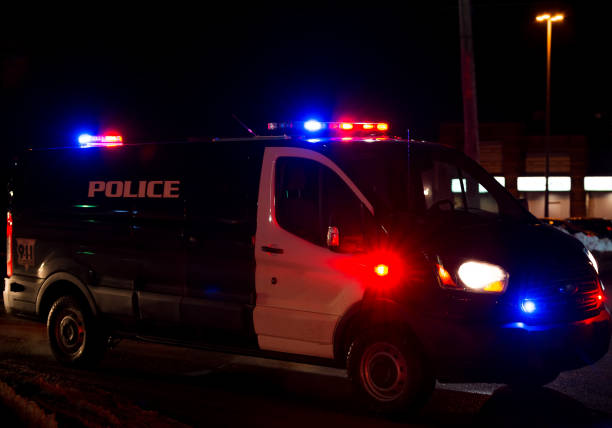
The crash occurred on the night of Wednesday, April 22, 2026 (the news emerged on April 23, prompting the original report). The exact time has not been released, but it was dark, on a highway known for heavy truck traffic and high speeds. According to authorities, Yorty’s vehicle became disabled and came to rest in the eastbound left lane, facing the wrong direction – meaning it was pointing westbound while in the eastbound lanes. An eastbound vehicle then struck it head-on. The impact was so severe that both drivers were trapped inside their vehicles, requiring mechanical extrication (the “Jaws of Life”) by emergency crews.
The driver of the second vehicle sustained injuries that are believed to be non-life-threatening and is recovering. The Pennsylvania State Police are leading the investigation, working to determine how Yorty’s vehicle became disabled in the travel lane and why it was facing the wrong direction. An autopsy is scheduled for Monday, April 27, 2026, to provide additional details regarding Yorty’s cause of death.
As the Bethel Township community and the wider Schuylkill County region mourn, family and friends remember Clint Yorty as a man whose life was cut short in an unexpected and heartbreaking way. This article expands on the known facts, explores the dangers of disabled vehicles on highways, explains the investigation process, and honors the life of the victim.
—
The Crash: A Secondary Collision on a Dark Highway
Interstate 78 is a major east-west highway in Pennsylvania, running from the Harrisburg area east to the New Jersey border. In Bethel Township, Schuylkill County, I-78 is a rural, four-lane divided highway (two eastbound, two westbound) with a speed limit of 70 mph. It carries significant commercial truck traffic, as well as commuters traveling between reading, Allentown, and Harrisburg. At night, visibility is limited to headlights and reflective markers.
According to the Berks County Coroner’s Office and Pennsylvania State Police, the sequence of events began when Clint Yorty’s vehicle became disabled. It is not yet known what caused the disablement – a mechanical failure (blown tire, engine failure, fuel issue), a prior minor crash, or a medical event. What is known is that the vehicle came to a stop in the left lane (the passing lane) of the eastbound side of I-78. Compounding the danger, the vehicle was facing the wrong direction – meaning it was oriented westbound, facing oncoming eastbound traffic.
Why would a disabled vehicle be facing the wrong direction? There are several possibilities, each with different implications:
· The vehicle spun out: A loss of control due to a tire blowout, a slick road, or an avoidance maneuver could have caused the vehicle to spin 180 degrees before coming to a stop.
· The driver attempted a U-turn: Unlikely on a divided highway, but if the driver was disoriented or panicked, they might have tried to turn around illegally.
· The vehicle was struck previously: A minor “first crash” could have spun the vehicle before it became disabled.
· Driver error or impairment: Alcohol, drugs, or a medical emergency could have led to erratic driving ending in a wrong-way stop.
Regardless of the cause, the result was a death trap. A stopped vehicle facing the wrong way in the left lane of a 70-mph highway at night is nearly invisible until the last second. The second driver – whose name has not been released – was traveling eastbound in the same lane. By the time the driver saw the stopped, wrong-way vehicle, there was little to no time to react.
The head-on collision was violent. Both vehicles crumpled, leaving both drivers trapped inside the wreckage. Emergency crews from Bethel Township Fire and EMS, Schuylkill County paramedics, and possibly surrounding departments (such as Pine Grove or Tremont) responded. They used hydraulic spreaders and cutters – the “Jaws of Life” – to extricate both drivers from their vehicles.
Clint Yorty was transported by ambulance to Reading Hospital (formally Reading Hospital – Tower Health), a Level 1 trauma center located about 25 miles southeast of Bethel Township. Despite the efforts of trauma surgeons and emergency physicians, Yorty succumbed to his injuries and was pronounced deceased at the hospital. The second driver was also transported, but with injuries described as non-life-threatening. No other passengers have been mentioned.
—
The Victim: Clint Yorty, 49
Clint Yorty was 49 years old. He was a resident of Schuylkill County, though the original report does not specify which town or borough within the county. Schuylkill County is a rural area in eastern Pennsylvania, known for its anthracite coal mining history, the Schuylkill River, and small communities like Pottsville, Tamaqua, and Frackville. At 49, Yorty was likely in mid-life – perhaps a father, a husband, a son, a brother, a coworker, and a friend. He may have worked in trades, manufacturing, healthcare, or any of the industries that dot the county.
The original report describes a “community mourning” and “grief and shock.” Those are not abstract phrases. In a rural county, a sudden death resonates through church pews, diner booths, and high school reunions. Friends are sharing memories on social media. Neighbors are offering to bring meals to the family. A GoFundMe may be organized to cover funeral expenses.
An autopsy is scheduled for Monday, April 27, 2026, at the Berks County Coroner’s Office. The autopsy is standard for a traumatic death and will document Yorty’s injuries, confirm the cause of death (likely multiple blunt force trauma), and collect toxicology samples. Toxicology results can take weeks and will indicate whether alcohol, drugs, or prescription medications were present in his system – which could help explain why his vehicle was disabled and facing the wrong way.
The family has not yet released a public statement, but they will have the opportunity to work with a funeral home for burial or cremation. Local funeral homes in Schuylkill County include Robert A. Evans Jr. Funeral Home in Port Carbon, Grabowski Funeral Home in Schuylkill Haven, or Schlitzer Allen Pugh Funeral Home in Pottsville.
—
The Second Driver: An Unnamed Survivor
The driver of the second vehicle – the eastbound car that struck Yorty’s disabled, wrong-way vehicle – has not been identified publicly. This is common when the driver is not at fault and when privacy laws (HIPAA) protect medical information. What is known is that this driver was also trapped and required extrication, but sustained only non-life-threatening injuries. That is remarkable given the severity of a head-on crash at highway speeds.
The second driver will carry both physical scars (from the crash and the extrication) and emotional trauma. Survivors of fatal crashes often experience post-traumatic stress disorder (PTSD), insomnia, flashbacks, and guilt – even when they were not at fault. This driver did nothing wrong; they were simply driving eastbound in the left lane when an unexpected obstacle appeared. There was likely no time to brake or swerve.
Police have not indicated whether the second driver will face any charges. Barring evidence of reckless driving (e.g., speeding excessively, driving under the influence), it is highly unlikely. The fault, if any, appears to lie with the circumstances that left Yorty’s vehicle disabled and facing the wrong way in a travel lane.
—
The Investigation: Piecing Together a Fatal Sequence
The Pennsylvania State Police (PSP) – likely from the Hamburg or Jonestown barracks, depending on jurisdiction – are leading the investigation. The Berks County Coroner’s Office is involved due to the death occurring in Berks County (Reading Hospital is in Berks County, though the crash was in Schuylkill County; jurisdiction can be complex).
The investigation is focusing on several key questions:
1. Why did Clint Yorty’s vehicle become disabled?
Investigators will examine the vehicle for mechanical failures: tire blowout, engine seizure, transmission failure, loss of fuel, electrical failure, or a broken belt or hose. They will also look for evidence of a prior, unreported minor crash – such as fresh damage on the vehicle’s front or side that wasn’t caused by the fatal head-on collision.
2. Why was the vehicle facing the wrong direction?
This is the most critical question. If the vehicle spun out due to a tire blowout or slick road, that could explain the wrong-way orientation. If Yorty intentionally turned around (e.g., to go back to an exit or to retrieve something), that would be a deliberate act that contributed to his own death. The PSP will analyze tire marks on the pavement to determine the vehicle’s path before stopping.
3. Were there any hazards on the roadway?
Could deer, debris, or a patch of ice have caused Yorty to lose control? April in Pennsylvania can have cold nights, but ice is unlikely by late April. However, a dead animal or a piece of tire from a truck could have been a factor.
4. Was Yorty impaired by alcohol or drugs?
Toxicology results from the autopsy will answer this. If Yorty had a high blood alcohol concentration (BAC) or drugs in his system, that could have caused him to lose control, misjudge the road, or attempt an illegal U-turn. If he was sober and the disablement was truly a mechanical failure, that would paint a different picture.
5. Did the second driver have time to react?
The PSP Accident Reconstruction Unit will calculate the stopping distance at night with headlights. If Yorty’s vehicle had no lights on (due to electrical failure or because the driver didn’t turn them on after stopping), it would have been nearly invisible. The second driver may have had zero reaction time.
6. Were both drivers wearing seatbelts?
Seatbelt use significantly reduces the risk of death in a crash. Yorty’s death doesn’t necessarily indicate he wasn’t belted – a head-on crash at 70 mph can kill even belted occupants. The second driver’s survival with non-life-threatening injuries suggests they were belted.
—
Highway Safety: The Dangers of Disabled Vehicles on Interstates
The death of Clint Yorty is a tragic case study in the dangers of disabled vehicles on high-speed highways. According to the National Highway Traffic Safety Administration (NHTSA), approximately 200-300 people are killed each year in the United States after their disabled vehicle is struck while stopped on a highway shoulder or travel lane. Many more are injured.
Best practices for drivers who experience a breakdown or crash on an interstate:
· Get off the road if possible. If the vehicle can still move, drive it to the shoulder, an exit ramp, or a rest area.
· If you cannot move the vehicle, stay inside with seatbelt fastened. Exiting the vehicle and standing near it is extremely dangerous – you are more likely to be struck and killed standing outside.
· Turn on hazard lights immediately.
· Call 911 to report your location and situation. Dispatchers can send help and may ask police to slow traffic.
· Do not attempt to push the vehicle or change a tire on a live highway unless you are far off the roadway.
· If you are stuck in a travel lane and cannot move the car, move to the passenger seat (further from traffic) and keep belts on.
In Yorty’s case, if his vehicle was facing the wrong way, he may have been disoriented, injured, or panicked. He may not have been able to call for help. The second driver never had a chance.
—
Emergency Response: Extrication on a Dark Highway
When the 911 call came in, dispatchers sent Pennsylvania State Police, Bethel Township Fire and EMS, and paramedics. The first priority was to secure the scene – closing the eastbound lanes of I-78 to prevent additional crashes. Then, the extrication began.
Mechanical extrication on a highway at night is dangerous for responders as well. They work inches away from live traffic (if the road isn’t fully closed), using loud hydraulic tools that can create sparks. They must stabilize the vehicles before cutting to prevent further injury to the trapped occupants.
The fact that both drivers were extricated suggests the wreckage was heavily compressed. Yorty was then transported to Reading Hospital – a 25-mile drive that, even with lights and sirens, takes 20-30 minutes. That is a long transport time for a critically injured patient. The second driver was likely taken to a closer hospital, such as Lehigh Valley Hospital–Schuylkill in Pottsville (formerly Schuylkill Medical Center), or possibly the same hospital depending on logistics.
—
Legal Aftermath: Liability and Charges
Because this appears to be a crash resulting from a disabled vehicle in the roadway – not a criminal act – it is unlikely that any criminal charges will be filed against the second driver. However, civil liability is a separate matter.
If Yorty’s family believes that the second driver was speeding or distracted, they could file a wrongful death lawsuit. But given that Yorty’s vehicle was stopped facing the wrong way in the left lane at night, that suit would be difficult to win. The second driver could potentially be found not at fault, or Yorty’s own negligence could be a contributing factor.
If a mechanical defect caused the initial disablement – e.g., a defective tire that blew out – Yorty’s family could sue the tire manufacturer or the mechanic who last serviced the vehicle. That would require expert testimony and evidence, and it is a long shot.
If Yorty was under the influence of alcohol or drugs, his estate could be held partially at fault. Pennsylvania is a “modified comparative negligence” state: a plaintiff can recover damages only if they are 50% or less at fault. If Yorty was drunk and driving erratically, he could be found more than 50% at fault, barring any recovery for his family.
The Pennsylvania State Police final report will be critical for any civil claims.
—
Community Grief and Memorial
The Schuylkill County community is small enough that the loss of one person is felt by many. Clint Yorty likely had friends in several towns, colleagues at his workplace, and relatives scattered across the county. The original report notes “deep sadness” and “grief and shock” – authentic emotions from a community that has lost one of its own.
A memorial may appear at the crash site on I-78 eastbound, near the location in Bethel Township. Flowers, a cross, and a photograph of Yorty may be tied to a guardrail. Passing motorists may slow down, not knowing why, but feeling the weight of the place.
In the coming days, a visitation and funeral will be held. The family will request privacy, but they may also welcome community support in the form of meals, donations, or simply words of comfort.
—
A Call for Witnesses
The Pennsylvania State Police continue to investigate and are urging anyone who witnessed the crash or who saw a disabled vehicle on I-78 eastbound in Bethel Township on the night of April 22, 2026, to come forward. Even if you did not see the crash itself, you may have seen Yorty’s vehicle before it became disabled, or you may have dashcam footage of the area.
Contact information:
· Pennsylvania State Police – Hamburg Station: (610) 562-6885
· Crime Stoppers (anonymous): 1-800-472-8477 (1-800-4PA-TIPS)
· Online tips: www.pacrimestoppers.org
Please reference the date (April 22, 2026), the location (I-78 eastbound, Bethel Township, Schuylkill County), and the victim’s name (Clint Yorty) when providing information.
—
Conclusion: A Preventable Tragedy?
Clint Yorty, 49, is dead because his vehicle became disabled on a dark highway and ended up facing the wrong way in a live travel lane. That is the simple, terrible truth. The secondary crash – the head-on collision that killed him – was almost inevitable once the first vehicle was stranded in that position.
Could it have been prevented? Yes, if Yorty had made it to the shoulder. Yes, if his vehicle had not spun around. Yes, if the second driver had somehow seen him in time. But “if” is a word that offers no comfort to the grieving.
The Pennsylvania State Police will complete their investigation. The Berks County Coroner will release autopsy results. And in Schuylkill County, life will go on – but not for Clint Yorty. Not for his family. They must now navigate a world without him, forever marked by a Wednesday night on Interstate 78.
Rest in peace, Clint. May your family find strength in each other and in the memories you left behind.
Anyone with information is urged to contact the Pennsylvania State Police – Hamburg Station at (610) 562-6885.
Leave a Reply